
CakCity
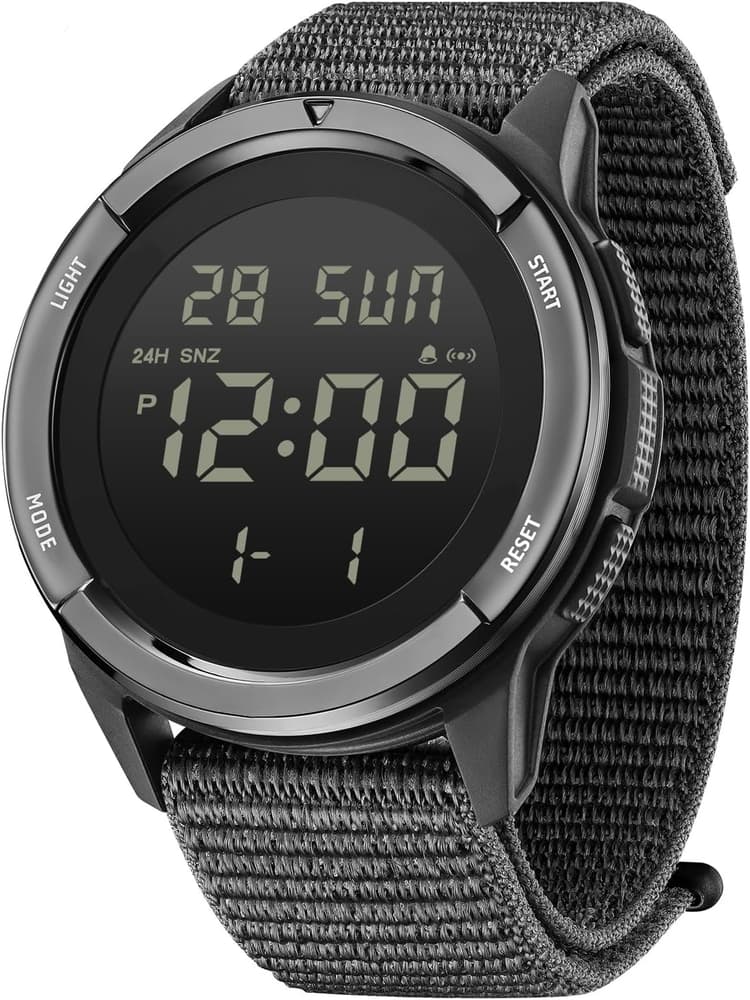
CakCity Digital Watch Military Watches for Men Black Tactical Sports Waterproof Men's Women's Wrist Watch with LED Backlight Nylon Band Stopwatch,Green
★★★★☆4.2
$17.99
$29.99
-40 %
*
Senior watch editor specializing in in-depth reviews, buying guides, and industry news.

Purpose and scope (2026 update)
This guide is designed to cut through marketing noise and help you choose a tactical watch that works for real-world needs in 2026. The term "tactical" now spans a broad set of products: traditional field watches, hybrid analog-connecteds, and full multisport GPS devices. Our approach remains pedagogical: define your use case, prioritise the technical criteria that matter today (notably multi-band GPS, improved solar options and ruggedized electronics), and score candidate watches against those needs.
How to use this guide — step-by-step
Quick reference table — match use to product families
| Use case | Typical watch family | Key priorities |
|---|---|---|
| Daily urban carry | Field / tactical analog or hybrid | Comfort, low profile, lume, water resistance |
| Long backcountry trips | Solar-assisted GPS / multisport | Battery life, accurate altimeter/barometer, multi-band GPS |
| Maritime operations | Dive-capable tactical | ≥20 ATM, corrosion-resistant materials, screw-down crown |
| Professional/industrial | Purpose-built rugged | Shock & magnetic resistance, serviceability, replaceable straps |
Links to continue: for curated selections and comparisons consult our Tactical watches - selection and comparison overview and, if you consider connected options, check the Smartwatches - features and complications hub for ecosystem considerations.
In 2026 we emphasise verifiable specs (multi-band GPS L1/L5, IP ratings, service networks) and test-based evidence. Use this guide as a decision framework: it helps you translate technical details into a ranked shortlist so a chosen watch is a durable tool, not just a look.
CakCity
$17.99
$29.99
-40 %
*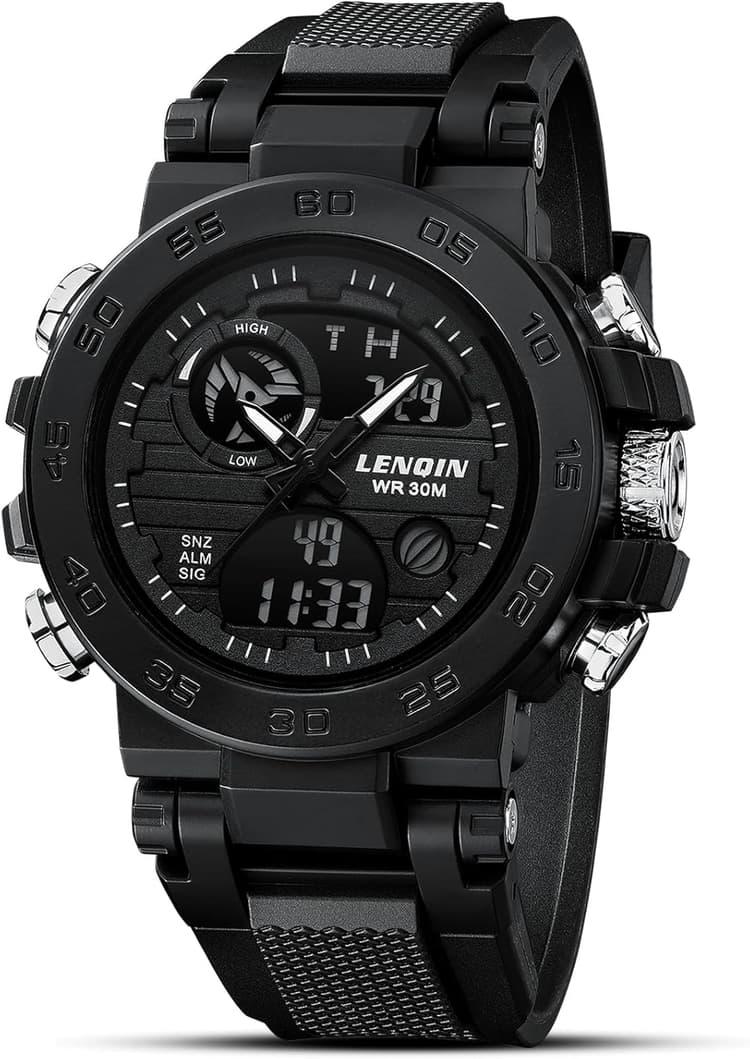
LN LENQIN
$9.99
$15.99
-38 %
*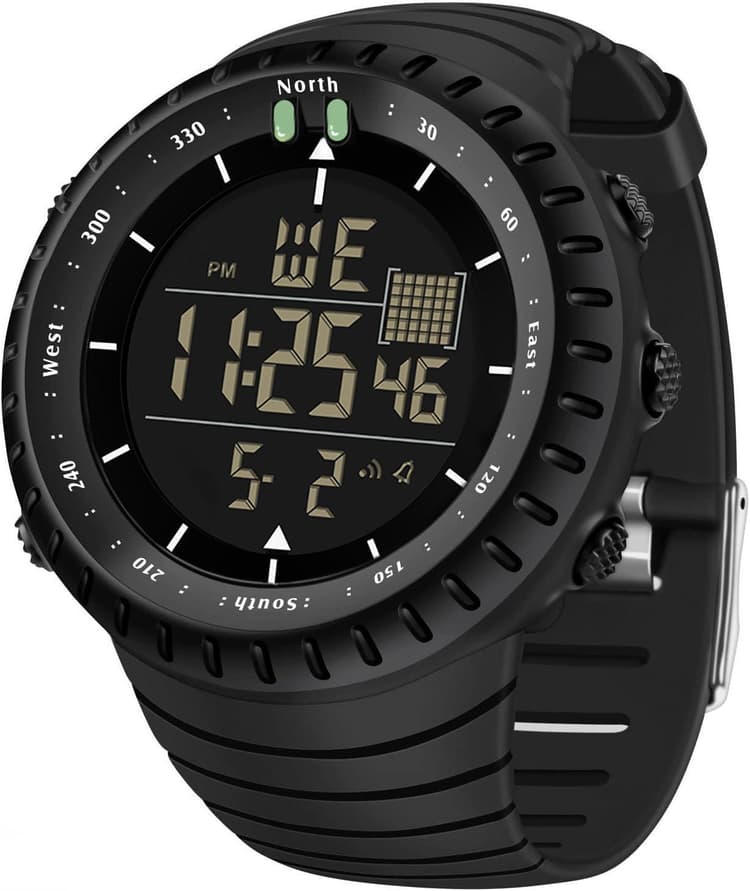
ManLinKei
$9.98
$15.99
-38 %
*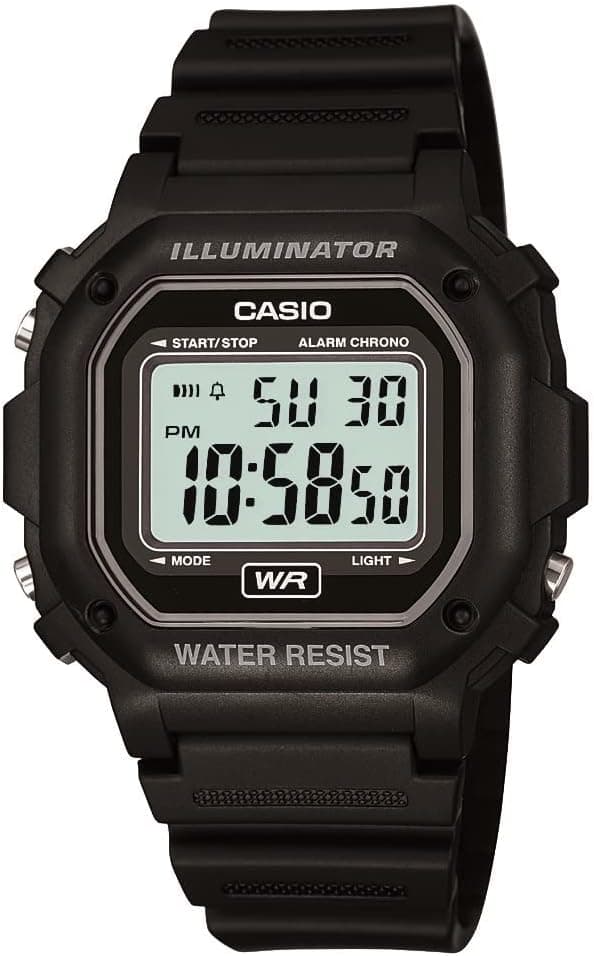
Casio
$21.92
$29.95
-27 %
*
Casio
$237.61
$320.00
-26 %
*
Casio
$29.84
$39.95
-25 %
*
Casio
$90.00
$120.00
-25 %
*
BASUMIU
$19.57
$25.97
-25 %
*
MEGALITH
$39.99
$49.99
-20 %
*
Casio
$45.00
$54.95
-18 %
*
MONDISOLT
$21.97
$25.97
-15 %
*
Casio
$99.00
$110.00
-10 %
*Start with intended use. An urban tactical watch differs from one meant for demanding hikes or professional tasks. To define needs, answer: what activities dominate (running, hiking, diving, fieldwork), how often will you wear the watch (daily, occasional), and which environmental constraints apply (humidity, dust, extreme temperatures). These answers shape choices for movement type, water resistance rating, and construction materials.
Rank priorities: mechanical toughness, battery life, specific functions (altimeter, barometer, GPS, illumination), or discretion (low profile, non-reflective). For instance, if you wear the watch continuously, comfort and night legibility are key; for weekend hikers, sensor accuracy and long autonomy matter most. Budget limits help eliminate unsuitable models early.
Consider interactions with existing gear. A large case may interfere with gloves or sleeves. A metal bracelet may snag fabrics, while a synthetic strap handles water and salt better. Also decide on maintenance tolerance: do you prefer a low-maintenance quartz or are you willing to service a mechanical movement? Clarifying these points narrows options and makes subsequent comparisons meaningful.
Why prices vary — core drivers in 2026
Three categories still explain most price differences, but the components have shifted slightly with 2024–2026 tech progress: materials & finishing, technical modules & sensors, and manufacturing, testing & serviceability.
Materials & finishing: sapphire crystal, marine-grade stainless steel (316L/904L) and titanium remain premium. Coatings such as DLC or upgraded PVD are common; note that coated edges show wear differently depending on geometry. Improved saltwater anodization for aluminum and better polymer composites have appeared in 2025–2026, reducing weight without losing corrosion resistance.
Technical modules & sensors: multi-band GPS (L1 + L5) and dual-frequency GNSS receivers are now features of higher-tier models — they materially increase cost but significantly improve positioning in canyons and under canopy. Advanced barometric/altimeter sensors and MEMS compasses with automatic calibration add price. Solar-charged power systems combined with efficient GPS firmware are more widespread, blurring quartz vs rechargeable models.
Manufacturing, QA & service: extensive environmental and certification testing (IP ratings, multi-cycle thermal shock, salt spray) plus precise assembly raise costs. Brands investing in a global service network and supplying spare parts (crystals, crowns, movements) price that into the product—this reduces total cost of ownership.
Value vs sticker price
To assess real value, ask: does the watch include a multi-band GNSS module, sapphire, and a clear spare-part policy? Is water resistance tested rather than asserted? A higher sticker price that buys reliable sensors and serviceability often yields lower lifetime cost than a cheaper but disposable model.
Quick checklist before purchase
For curated options across budgets, see our Tactical watches - selection and comparison hub and for mid-/premium context consult Mid-range watches: picks and practical guidance.
Understanding what you pay for in 2026 lets you set a price band that matches real-world durability and service expectations rather than marketing claims.
Size is defined mainly by case diameter and thickness. Begin by measuring your wrist in centimeters to pick proportions. A slimmer wrist (under 17 cm) often fits 36-42 mm cases comfortably; larger wrists can accommodate 43 mm and up. Thickness affects comfort: thick cases catch on sleeves and can be cumbersome during day-to-day tasks.
Weight strongly affects long-term wearability. Steel cases and metal bracelets are heavier than titanium cases or textile straps. If you intend all-day wear, test weight distribution: a low center of gravity at the wrist reduces the 'tipping' sensation.
Strap type determines feel: leather, rubber, nylon and metal each behave differently. Leather is comfortable but less water-resistant; nylon is lightweight and dries fast; rubber performs well during physical activity. Check lug width for strap compatibility and ease of replacement. Finally, look at lug shape and clearance for pushers and bezel: any rubbing against skin or wrist hair will become irritating over time.
Materials determine resistance to impact, corrosion and wear. Key components are crystal, case, caseback and strap. Sapphire crystal resists scratches best; treated mineral glass is a cost-effective compromise. Case materials—steel, titanium, aluminum or polymer—dictate weight, corrosion resistance and thermal behavior.
Construction affects water resistance and longevity: quality seals, screw-down casebacks, screw-down crowns and anti-corrosion treatments extend life in wet or salty environments. PVD and DLC coatings increase abrasion resistance but can wear on exposed edges. For straps, solid end links and screwed-in spring bars usually outlast cheap folded links.
Also consider internal protection: movements mounted on shock absorbers, sealed assemblies and IP-rated electronics for connected watches. No watch is indestructible; assess repairability and spare part availability. A watch designed to be serviceable will often deliver better long-term value than a similarly priced disposable product.
Feature-by-feature: what matters now
Below are the most consequential features for tactical use in 2026, with plain-language notes on benefits and trade-offs. Use this to populate your decision matrix.
Water resistance (ATM/meters and seals) — Don't rely solely on a meter number: check for screw-down crowns, sealed pushers and test statements. For mixed marine/field use, prefer 20 ATM or dive-specific construction; for general outdoor use 10 ATM remains a practical baseline.
Illumination & night legibility — Luminova variants remain typical; tritium tubes (GTLS) offer continuous low-light visibility without charging. Many modern hybrids combine bright LED backlight modes with long-lasting photoluminescent paint.
GPS & navigation — Multi-band GNSS (L1+L5) and multi-constellation support materially improve fix reliability under canopy and in urban canyons. These modules increase price and power draw; look for firmware with smart-duty cycles or solar assistance to mitigate battery impact. For focused running or route-following, consult our Running GPS Watches - Comparison and Selection.
Altimeter / Barometer / Compass — Useful when accurate elevation/profile data is required. Check calibration ease and whether barometric data is corrected automatically for proven altitude tracking.
Movement — Quartz still offers low-maintenance precision; automatics give mechanical appeal but need servicing; hybrid and smartwatch platforms deliver mapping, notifications and advanced sensors but require charging and attention to app ecosystems.
Shock & magnetic resistance — Seek explicit standards (e.g., ISO references or manufacturer test descriptions) and read independent drop/impact tests when available.
Repairability & spare parts — A feature often undervalued: screw-in bars, replaceable crystals, and a published spare-parts policy are indicators of long-term value.
How to compare
Create a 3-column matrix: "Must-have", "Useful", "Avoid" and score each model across weight, battery impact, and ease-of-use. Features that add weight or complexity but you never use should be deprioritised — operational simplicity beats impressive but unused specs.
For a curated cross-section of tactical designs and how features are balanced in product lines, see Tactical watches - selection and comparison.
A structured week-long test you can run before committing
Real-world performance only becomes clear after days of use. Run this practical checklist over 5–7 days to approximate everyday experience with a candidate watch in 2026.
Daily tests (repeatable checks)
Performance & endurance
Durability checks
Maintenance & ecosystem
Gather external evidence
Combine your tests with independent lab results and multi-month user reviews. Community feedback often reveals recurring failure modes not obvious in a short test.
Use the outputs of these checks to populate the decision matrix (weight each pass/fail according to your priorities). In 2026 firmware maturity and service policies are as important as hardware specs — give them weight in your final score.
Several mistakes commonly affect beginners. First, confusing tactical styling with tactical function: buying a watch that looks rugged but lacks features needed for real use. Second, overlooking strap and case compatibility and ending up with an uncomfortable fit. Third, overvaluing specialized features: a high-precision GPS may look essential but adds weight and shortens battery life.
Practical expert tips: wear-test a watch for at least 48 hours before committing; watch how it performs in your everyday routines. Favor operational simplicity: a complex feature you never use is dead weight. Check for alternative strap availability and ease of maintenance. For water resistance, choose watches with clear ratings (e.g., 10 ATM) and protected crowns. Most importantly, map your intended use to technical specifications rather than marketing copy.
A useful technique: create a decision matrix with three columns - must-have, useful, and unnecessary - and sort each feature accordingly. This makes trade-offs explicit and prevents purchases driven by aesthetic appeal alone. These practical habits reduce buyer's remorse and improve long-term satisfaction.
Casio
$99.00
$110.00
-10 %
*
Casio
$24.26
Casio
$21.92
$29.95
-27 %
*Casio
$29.84
$39.95
-25 %
*
Casio
$99.00
$110.00
-10 %
*Casio
$90.00
$120.00
-25 %
*
$470.54
$499.99
-6 %
*Casio
$45.00
$54.95
-18 %
*Casio
$237.61
$320.00
-26 %
*CakCity
$17.99
$29.99
-40 %
*LN LENQIN
$9.99
$15.99
-38 %
*MONDISOLT
$21.97
$25.97
-15 %
*Selecting a tactical watch requires aligning a clear assessment of needs with careful reading of technical specifications. Start by identifying primary use and ranking priorities: comfort, water resistance, battery life, sensors or ruggedness. Then interpret price relative to materials, manufacturing quality and included functions. The right balance depends on use: a durable, serviceable field watch may justify a higher investment if you wear it often.
When narrowing choices, focus on size and weight, check readability and control ergonomics, and evaluate how features affect maintenance and battery life. Avoid purchases driven solely by appearance or advertising. Use a decision matrix like the one suggested in this guide to score models against your personal criteria. Also check warranty terms and spare parts availability, as these determine long-term value.
By following these steps you reduce the risk of an unsuitable buy and enhance long-term satisfaction. Take time to validate your expectations in real conditions: a well-chosen tactical watch becomes a reliable tool, not merely an accessory.
This guide was compiled from technical sources, independent tests and practical usage standards. No brands or products are promoted and there is no sponsored content. The advice follows a pedagogical approach to help readers select based on priorities. Technical information (water resistance, materials, movement types) is general; always check manufacturer specifications for a particular model.
Tests and articles by watch experts, based on technical criteria and side‑by‑side comparisons.
We compare models and features to inform your choice, free from commercial influence.
Guides are regularly updated to reflect new releases and market developments.
We may earn a commission from links to partner retailers; this does not affect our independent analyses.